
How to Choose an Injection Mold Manufacturer: 12 Questions
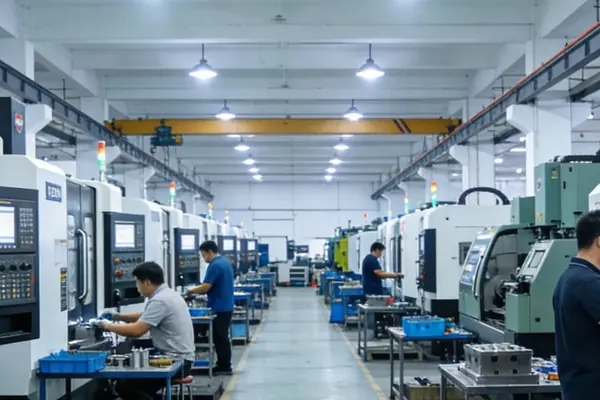
Choosing an injection mold manufacturer is mostly an exercise in
verifying capability, because almost every supplier can present a portfolio of good
looking parts. What separates a supplier who can build your tool from one who will
cost you a second attempt is written evidence: a reviewed design report, a flow
simulation, a trial report with measured dimensions, and documentation that matches
what was promised. This guide sets out the eight areas to verify, the questions that
extract real answers, and the red flags that should end an evaluation.
Short answer
Verify eight things before you award a tooling order: design review capability,
mold flow analysis, machining and assembly capacity in-house, steel and heat
treatment sourcing, surface finish capability, trial and first article reporting,
documented quality systems, and after-sales support with a named engineering contact.
Require each of them as evidence rather than as a statement on a
website. A supplier who can show all eight does not need to be the cheapest, and
usually is not.
Two questions do most of the work. First: can you show me a DFM report for a
part like mine, with the issues you would raise and the changes you would propose?
Second: can you show me the last first article report you issued for a tool like
mine, with measured dimensions? A supplier who answers both specifically is
almost always capable. A supplier who answers both generally is telling you the
review and the trial are not really part of their process.
The eight criteria that matter
Eight areas account for nearly all of the difference between a good tooling
supplier and a cheap one. Weight them in this order, because the early criteria are
the ones that are hardest to fix later.
| # | Criterion | What evidence to ask for | Why it ranks here |
|---|---|---|---|
| 1 | Design review (DFM) | A written report on your actual 3D file, returned within 24 hours, listing specific issues with proposed changes | Errors caught here are free; errors caught after steel is cut are not |
| 2 | Mold flow analysis | Fill pattern, weld line position, air traps and predicted sink for your geometry | Simulation predicts defects that only appear after the tool exists |
| 3 | In-house machining | Machine list, spindle hours per month, and whether critical steps are outsourced | Outsourced core operations cost schedule and cost you control |
| 4 | Steel and heat treatment | Steel supplier, grade traceability, heat treatment records with hardness charts | Tool life is decided by the steel, not by the cavity polish |
| 5 | Surface finish | Which SPI standard they hold and which grades their polishers achieve in practice | Finish is the first thing a customer sees and the last thing to rework |
| 6 | Trial and first article | A trial report with measured dimensions against your drawing, before shipment | Without it, the first trial happens at your line instead |
| 7 | Quality system | ISO 9001, IATF 16949 or ISO 13485 certificates, plus the actual inspection record | Determines whether documentation is real or decorative |
| 8 | After-sales support | A named engineer, a maintenance schedule, and a response time for tool issues | A tool is a 10 year relationship, not a 10 week project |
Our mold design guide covers the design
principles behind criterion 1, and the mold flow
analysis page explains what a simulation does and does not predict. Both are
worth reading before you evaluate any supplier, because they tell you what a real
review should contain.
Verifying tooling capability
Tooling capability is the easiest thing to fake and the hardest to assess, because
a supplier can show you a beautiful tool in a showroom. Look past the tool and check
the process behind it.
- Ask which steps are in-house. A supplier that outsources core
machining to a job shop loses control of the schedule at exactly the point where
delay is most expensive. Our factory and equipment page
lists what we run ourselves, from 5-axis CNC through to grinding, EDM, welding and
tool assembly, because outsourcing that work would put your date in someone else’s
queue. - Ask about heat treatment. P20 pre-hardened steel is machined
directly. H13, S136 and most other hardened steels need heat treatment after rough
machining and before finishing, with a hardness check recorded. Ask to see a
hardness chart. - Ask how many tools are in assembly and trial at the same time.
>A supplier running a large queue is honest about it; a supplier claiming unlimited
capacity usually means your job will queue behind something less attractive. - Ask what happens when a tool needs repair. A dropped or
damaged cavity should not mean a new tool. See our mold
maintenance page for what a maintenance schedule should contain and what tool
life management looks like in practice. - Ask for cavity count reasoning. The right number of cavities is
a function of annual volume, machine tonnage and cycle time, not of a target
number. See the injection molding cost
page for how cavity count flows into the price.
Verifying engineering depth
The clearest separator between suppliers is the quality of the engineering
conversation before the price is discussed. A supplier with real capability
engages with your geometry and pushes back; a supplier without it accepts whatever
is drawn and quotes it.
| Question to ask | A strong answer | A weak answer |
|---|---|---|
| What would you change on my design? | Names specific features, quantifies the effect on cost or cycle time, and proposes a workable alternative | “Nothing looks difficult” or a generic list of general cautions |
| Where will you put the gate and why? | Relates gate position to flow direction, weld line visibility and the cosmetic surfaces you identified | Places the gate by default and moves on |
| How will you control shrinkage? | States the expected shrink for your resin and grade, and how it is applied per direction | Applies a single default percentage |
| What is your trial procedure? | Describes shot count, measurement points, and who signs off the first article | “We test it before shipping” |
If the engineering answer is specific, the commercial answer is usually reliable
too. If it is vague, the quotation will be equally vague, and a vague quotation is
difficult to hold anyone to.
Verifying quality control
Quality control is where the cost of a mistake becomes visible. Three
mechanisms do most of the work.
- Incoming material verification. Resin should be checked against
your specification on arrival, with drying recorded where the material is
hygroscopic. Our materials page covers the grades
we run and the handling each family needs. - First article inspection. Every production tool is
trial-moulded and a report issued with measured dimensions against your drawing.
Ask whether the report includes the critical dimensions only or the full set, and
ask to see a redacted example. - Process monitoring. Barrel temperature zones, melt temperature,
hold pressure and cooling time are recorded for the critical shots. Those logs are
the evidence behind any later claim about part quality.
For regulated industries, the documentation itself is the deliverable. Our
quality and certifications page lists ISO 9001,
IATF 16949 and ISO 13485, and the inspection and documentation scope that comes
with each. If your product is medical, automotive or food-contact, ask for the
documentation package in the purchase order rather than trusting that it exists.
Reading a quotation beyond the price
Two quotations can differ by 40 percent and describe the same tool. The
difference is almost always in the assumptions, so the comparison has to happen
line by line rather than on the total.
| Line item | What changes the price | What to ask |
|---|---|---|
| Steel grade | P20 against H13 is typically 15-30% of tool price, and changes tool life completely | Which grade, and is the heat treatment included? |
| Cavity count | The largest single driver of price; also drives cycle time and throughput | What is the reasoning for this number against our annual volume? |
| Surface finish | SPI A1 versus A3 on a cosmetic part can add 20-40% | Which SPI standard, and on which surfaces? |
| Hot runner | Manifold and valve hardware, but reduces scrap and cycle time at volume | Is it a valve gate, and is it included in the maintenance scope? |
| Sub-molds | Each slider, lifter or unscrewing mechanism adds 15-40% | Are all sub-molds itemised, or bundled into a single line? |
| Trial and first article | Number of trial shots and whether measurement is included | How many shots, and do we receive the report? |
Our injection mold cost breakdown
article gives the benchmark ranges for each of these lines, which is the
fastest way to tell whether a quotation is in a realistic band or not. The
lead time guide covers the
equivalent question on schedule.
Red flags that end an evaluation
There are a handful of responses that, on their own, are enough to move on.
- A price far outside the benchmark band. A tool quoted at a
third of the realistic range is not a bargain, it is a different tool. It is rarely
recoverable after the deposit. - No trial shots included. If the quotation does not mention
trial and first article, assume the first trial happens on your production line
and the cost of that lands with you. - Refusal to do a DFM review before quoting. Refusing to look
at the geometry means the price is a guess, and guesses on tooling are expensive. - Documentation offered without detail. “We can provide all
certificates” without naming which ones and what they cover is a promise rather
than a capability. - Payment terms with the entire balance due before shipment of a
moulded sample. The standard structure is a deposit, a progress payment at
tool build, and the balance on first article approval. A structure that asks for
most of the money before you have seen a part in your hand transfers all the risk
to you. - Pressure to commit before the design is frozen. Tooling
committed against a moving design will either cost you a revision or ship you a
tool that does not fit.
Comparing quotations fairly
Build a simple comparison table across all quotations and fill in the same
categories for each. It takes twenty minutes and is the single most useful
document in the evaluation.
- Steel grade and heat treatment for each quotation, on one
row. - Cavity count and the cycle time it implies, so you can compare
throughput as well as price. - Surface finish standard per quotation, including which
surfaces are covered. - Runner system, hot or cold, and whether the manifold is
included in the price or quoted separately. - Sub-molds itemised, so a bundled “complex features” line can
be compared against an itemised one. - What is explicitly excluded, since exclusions are where the
variation hides. - Delivery schedule in weeks, and what it assumes about design
freeze on your side. - Payment milestones, and whether a first article approval
gate exists before the final payment.
Ask each supplier to complete the same table. It is entirely normal for a
serious supplier to do so without being asked, and for a weak one to take a long
time to answer.
What to do on a factory visit
If you visit, go to the tool room rather than the meeting room. Six things are
worth checking, and they take under an hour.
- Look at tools in trial. Ask to watch one being moulded. Cycle
time and the consistency of the automatic take-out tell you more about process
control than any certificate. - Check the maintenance corner. A tool being serviced, cleaned
and measured tells you whether maintenance is a routine or an emergency. - Ask the machinists, not the sales team. The person running
the CNC knows how long your part will really take. Compare their answer with the
lead time you were quoted. - Look at the first article reports on the desk. They are often
within reach, and they show you exactly what gets measured. - Check the polish and EDM areas. Surface quality is visible in
finished parts, and a shop that keeps samples of its own work nearby is a shop
that looks at its output. - See the material storage area. Resin should be stored under
controlled conditions, with lot traceability. This is a small detail that
predicts a lot about discipline.
If a supplier offers you something closer to a full plant audit, that is a
strong signal. We are happy to walk a prospective customer through our own
toolroom, because the tool room tells the truth faster than a brochure does.
Three supplier evaluations
The criteria above are general. Here is how they play out on three real
evaluations, and what the evidence actually showed.
Evaluation 1: A 120 mm ABS enclosure, 60,000 per year, budget around USD 6,000
Three quotations came back within a few days of each other, and the spread was
almost 45 percent. Reading them line by line showed why. One quoted 1 cavity in P20
with standard finish. One quoted 2 cavities in P20. The third quoted 2 cavities in
H13 with a hot runner. The steel and runner differences accounted for nearly the
entire spread. The decisive evidence was the first article report the third supplier
attached: measured dimensions on the critical features, with a trial shot log. On the
strength of that, the buyer chose the higher quotation, and the tool ran at the
target cycle from the first production day instead of the third.
Evaluation 2: A medical fluid connector, 40,000 per year
Here the documentation requirement decided it. Two suppliers priced within 8 percent
of each other. One included ISO 13485 certification, material traceability, and a
documentation package as a line in the quotation. The other said certificates could be
provided on request but did not list what they covered, and the quotation excluded
documentation entirely. The first supplier won the order, and the first article report
arrived with cavity photographs and temperature logs attached. For a regulated part,
the evidence is not a bonus, it is the product.
Evaluation 3: A startup enclosure, volume not yet proven
The buyer had a working prototype and no volume history, so the evaluation question
was different: which supplier would not over-engineer the tool. The lowest quotation
proposed a production H13 tool at USD 19,000. A second supplier proposed an aluminium
bridge tool at USD 2,400 with a 10-day delivery, and quoted a production tool later
once the program was confirmed. The evaluation found a supplier willing to recommend
the cheaper path, which is the clearest signal available about engineering judgement.
The production tool was ordered eight months later, when the volume existed.
Supplier evaluation terms quick reference
| Term | Meaning | Why it matters in an evaluation |
|---|---|---|
| DFM report | Written design-for-manufacture review of your 3D file | The cheapest place to catch expensive errors; ask for it before comparing prices |
| First article report | Measured dimensions of the trial parts against your drawing | Evidence that the tool was actually validated before shipment |
| Sub-mold | A separate moving insert: slider, lifter, unscrewing core | Each one adds 15-40% to tool price; check they are itemised |
| Hot runner | Heated manifold feeding gates directly, no cold runner | Higher tool cost, lower scrap and cycle time at volume |
| Heat treatment | Thermal hardening of steel after rough machining | Determines tool life; ask for the hardness chart |
| First article approval (FAA) | The customer gate before final payment | Your only protection before the balance is due |
| Trial shots | The shots run to validate the tool before shipment | If excluded, the first trial happens on your line instead |
| Tool life | Expected shots before the tool needs rebuilding | A function of steel, cooling and cycle; ask for a number, not a promise |
| Bridge tool | Fast aluminium or soft-steel tool for prototypes and validation | Thousands of shots at a fraction of production tool cost |
| Traceability | Recorded link between resin lot, process settings and the part | Required for medical, automotive and food-contact parts |
Frequently Asked Questions
How do I know if an injection mold manufacturer is capable?
Should I choose the lowest quotation?
How long should an injection mold quote take?
What is the difference between a prototype mold and a production mold?
Does it matter where the mold manufacturer is located?
Do you provide first article inspection and material certification?
Where this applies
Send us your 3D files for a DFM-backed quote
Share your STEP or IGS files with target material and annual volume. You get a written design review and a full quotation within 24 hours.
- 23+ Years of experience
- 2,000+ Molds per year
- 24h Quote turnaround